- eligibility
- cibil
Business loan with a low CIBIL score: what lenders really check
Lenders look past the number. Here is what a credit officer checks on your report, which reasons they accept, and what to bring before you apply.
Nikhil Singh8 min read
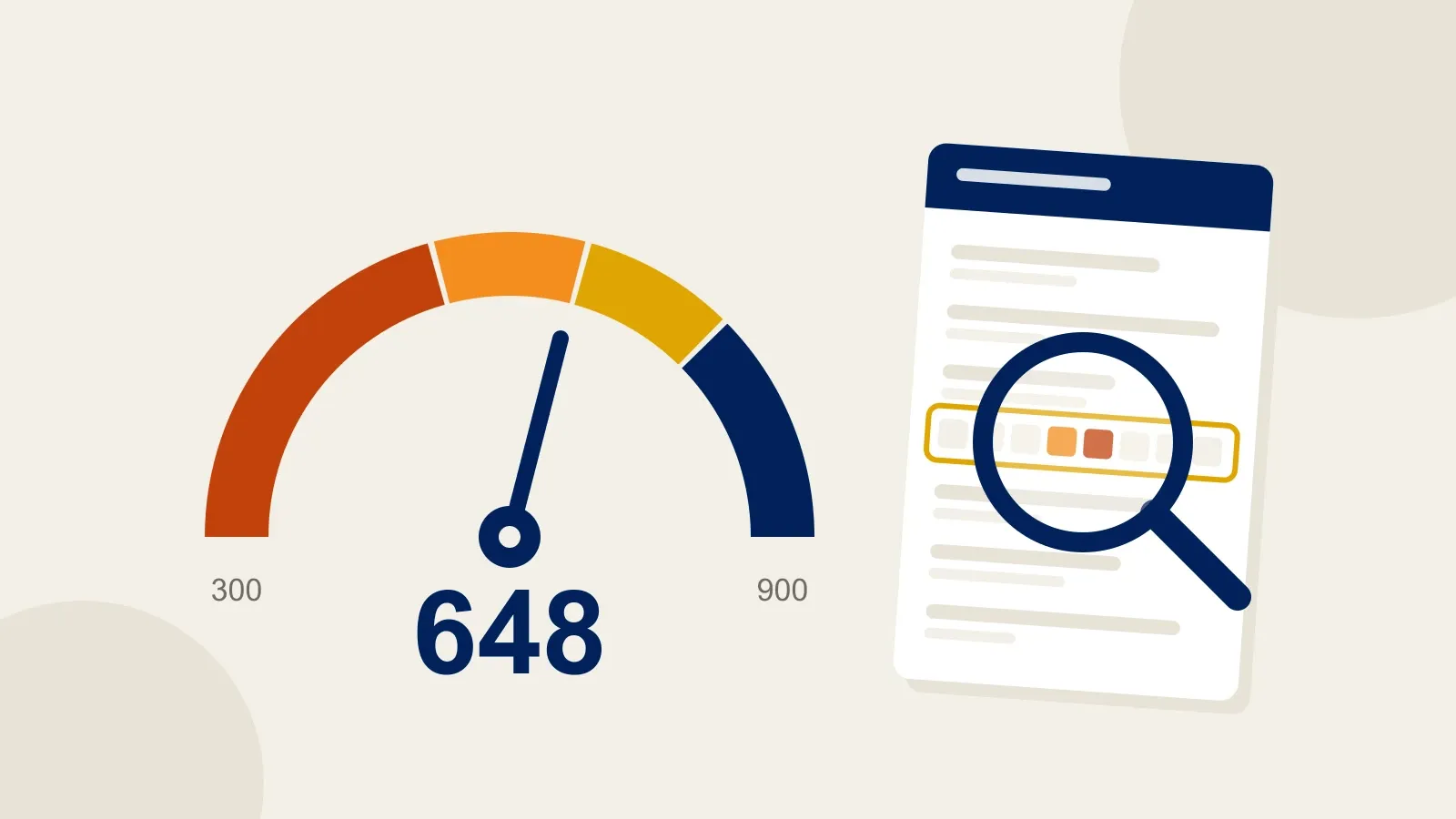
Yes, you can get a business loan with a low CIBIL score. Many lenders treat 700 as their usual minimum, but NBFCs and MSME-focused lenders approve lower scores case by case, sometimes even below 600. What decides it is why your score is low, how recent the problem is, whether it is fixed, and whether your business earns enough to pay the new EMI.
Let me tell you how it really works.
What counts as a low score
Your CIBIL score is a number between 300 and 900. Most lenders want 700 or more. Below that, your loan needs a special approval from the lender’s credit team. Lenders who work with small businesses do give these approvals when the reason is genuine. Even a score below 600 can go through.
CIBIL is the name everyone knows, but lenders may also check your Experian, Equifax or CRIF report. Everything below works the same way for all of them.
What the lender actually sees
The lender doesn’t just see 648. They see your full CIBIL report: every loan and card you have ever taken, month by month. This is what one loan looks like.
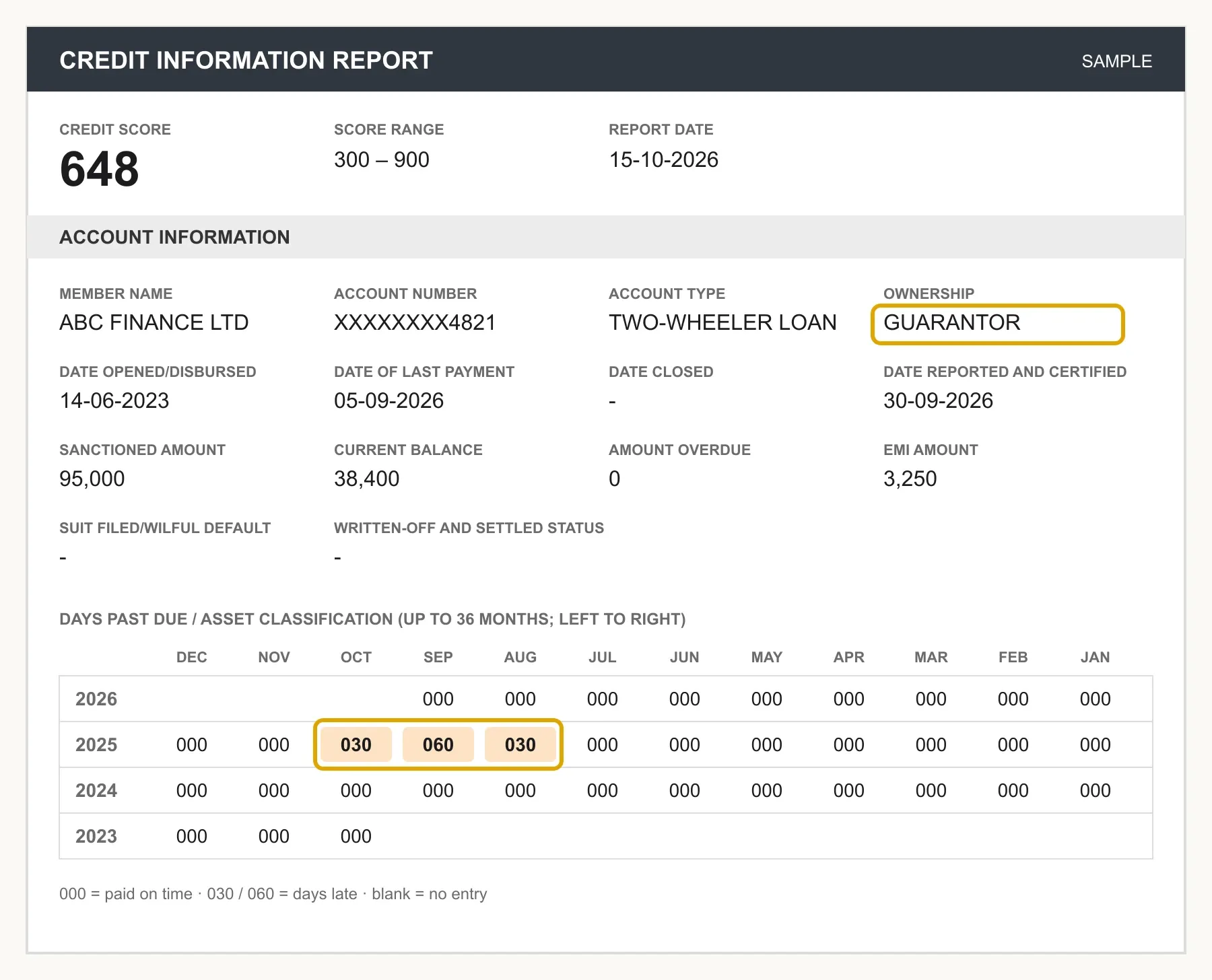
On top: which lender gave the loan, what type of loan it is, and your role in it, under Ownership. Then the dates and amounts. At the bottom is the payment history, one box for each month, latest month first. 000 means paid on time. 030 means 30 days late.
Say you run a hardware shop in Indore. Three years back, your brother bought a bike and you signed as guarantor. Last year he missed three EMIs. Even if you never paid late even once, Ownership says “Guarantor”, so those late months are on your report too.
The officer will go through every loan like this, one by one. Which lender? How much EMI? Paid from which bank account? What did you use the money for? Is it still running? And if your score is low, they will ask you directly: “Why is your CIBIL down?”
“I don’t know” is the worst answer. A good answer is “That’s my brother’s bike loan. I was only the guarantor. Here are his last six months of payments.”
Why your score might be down, and what to carry
Most low scores come down to a few reasons. Here is how each one plays out, and what you should carry with you.
A late EMI or card payment
This is the most common reason. The officer will ask why it was late, and whether it has happened again since.
Say you have a garment unit in Tiruppur. You missed two EMIs in the 2021 Covid lockdown, but every EMI after that went on time. That is old, the reason is clear, and you have four years of clean record after it. Now compare that with a credit card bill that was 30 days late just three months back. That one will get more questions, because it is recent.
Carry: bank statements showing your EMIs going on time since then.
An EMI that bounced
Many times you had the money, just not in the account on the EMI date. Say your EMI is on the 5th, but your big parties pay you around the 10th. The EMI bounces, and it still goes on your report.
Keep the money in the account a few days before the EMI date, or ask your lender if they can shift the date. If the bounce was the bank’s mistake, ask the bank for a letter saying so.
Carry: recent bank statements showing your EMIs clearing on time.
A closed loan that still shows as running
This happens a lot with gold loans.
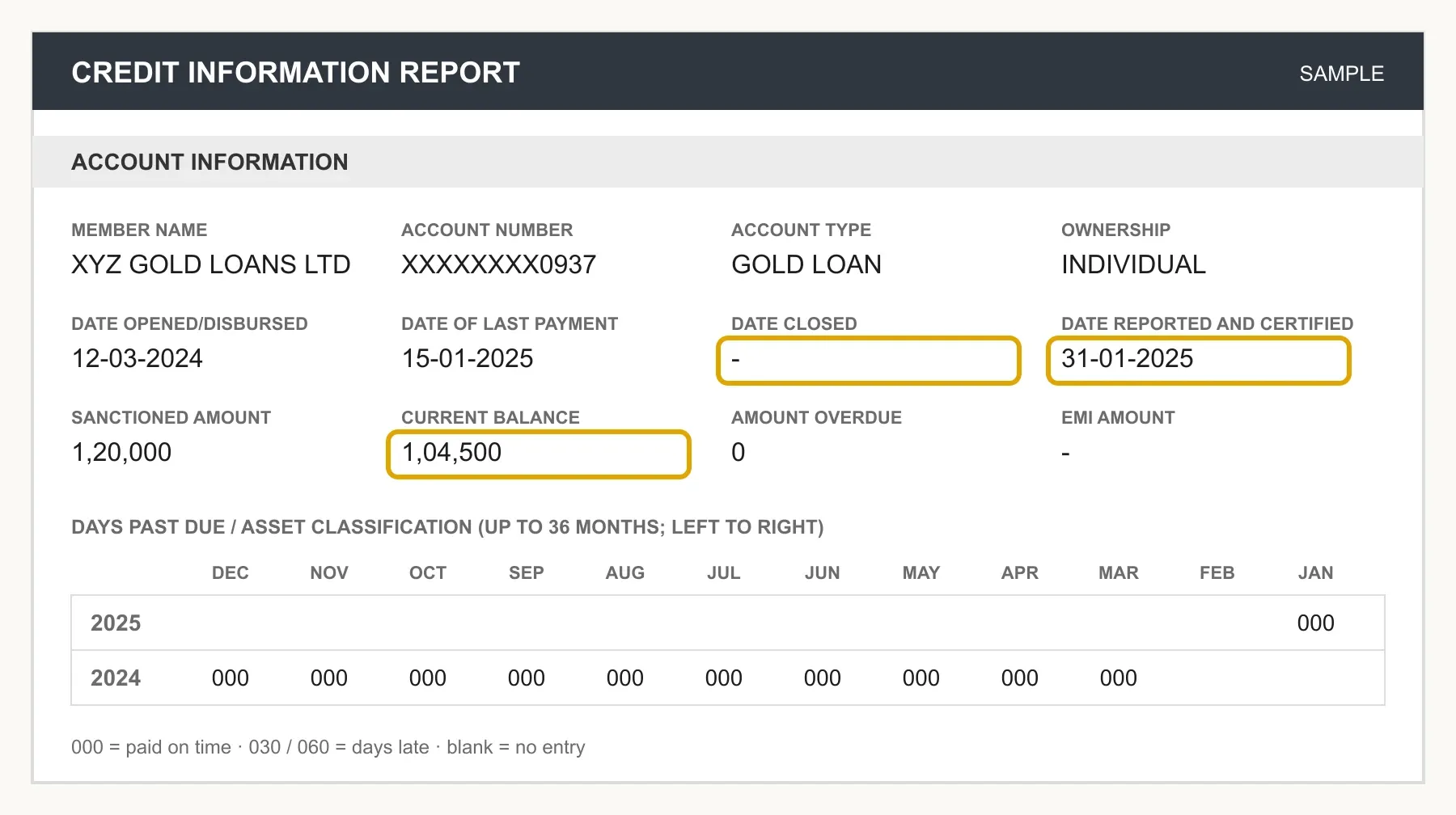
Say you closed this gold loan in February 2025. But Date Closed is empty, the balance still shows ₹1,04,500, and the lender hasn’t updated anything since January. For the officer, this loan is still running.
Carry: the NOC (closure letter). Don’t have it? Ask the lender for it, and raise a dispute (complaint) with CIBIL to get your report corrected.
A loan you never took
Say your report shows a ₹4 lakh business loan, and you have never taken one. It could be a mistake, or someone may have used your documents.
Raise a dispute with CIBIL. If it is fraud, file a police or cyber-crime complaint too.
Carry: both complaint numbers.
A settled loan
“Settled” means you paid less than the full amount and the lender closed the account. Lenders see this as more serious than a late payment. The officer will ask why it happened and whether anything is still pending.
Carry: the settlement letter, payment proof and the NOC.
A group loan
Say you are in a group loan with nine others from your area, and most of them stop paying. Their late payments can show on every member’s report, yours too.
Carry: statements showing you paid your share every month.
Too many loan applications
Every time you apply for a loan, the lender checks your CIBIL, and that check shows up as an “enquiry”. This is what it looks like when someone has applied at many places.
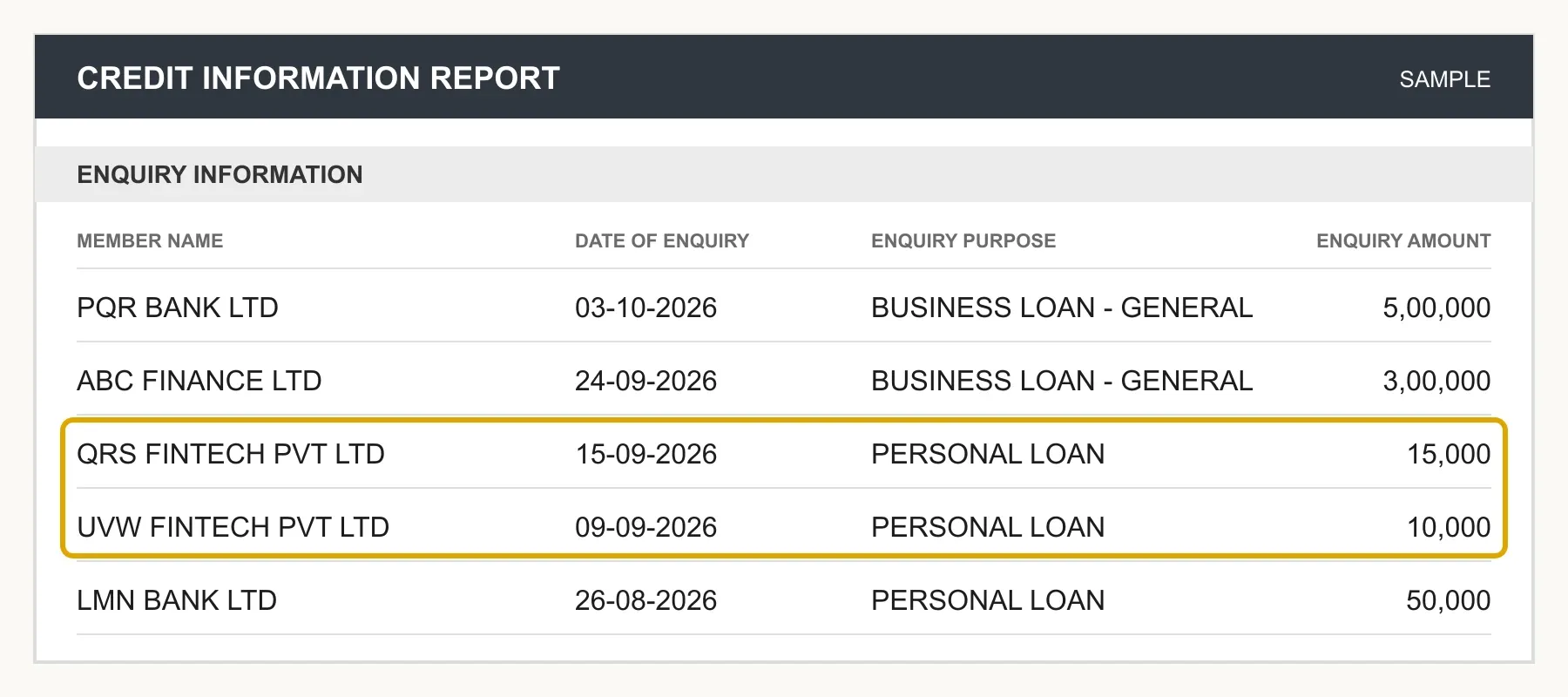
Five applications in less than six weeks. The officer’s first thought: did these lenders say no? Next: why does a business asking for ₹5 lakh also need ₹15,000 from a loan app?
If you were just comparing interest rates, or you said no because the amount was too small, tell them that. But better not to get here at all. Pick one or two lenders that suit your case, and apply only there.
What lenders will accept
Lenders don’t expect a perfect report. They want a reason that makes sense, proof for it, and to see that the problem is over. These usually work:
- Something went wrong once, for a clear reason, and you have paid on time since. Like COVID, a medical emergency at home, or a bank mistake with auto-debit.
- The report is wrong. A loan you closed, or one you never took.
- It is someone else’s loan. One you were guarantor for, or a group loan.
- You didn’t know. Many people don’t know that a gold loan, a phone on EMI or a guarantee shows up on their CIBIL. Lenders who work with small businesses understand this.
What worries them
- Dues still pending today.
- Late payments on your own loans in the last few months.
- A recent settlement, without an NOC.
- Many applications in a short time, with no loan after them.
- So many EMIs already running that a new one won’t fit your income.
- Answers that keep changing. The officer can see every loan. Saying “I don’t remember” about an application from two weeks back won’t help.
What you should do before applying
- Get your full CIBIL report, not just the score from an app. The app score and the lender’s score can be different. You can get one free full report every year from each bureau: CIBIL, Experian, Equifax and CRIF High Mark.
- Check every loan on it. If something is wrong, raise a dispute. As per RBI rules, it has to be sorted out within 30 days, or you get ₹100 for every day of delay (CIBIL’s page on this).
- Keep your papers ready: NOCs, settlement letters, complaint numbers, guarantor papers.
- If your wife or husband is your co-applicant, check their report too.
- Close what you can. Lenders now update CIBIL every 15 days, so a loan you close today should show as closed in about a month.
- Don’t apply everywhere.
- Keep money in your EMI account a few days before the EMI date.
- Have reasons ready for each problem on your report, and tell the officer.
How nāvik helps
nāvik works with lenders who do give loans on a low CIBIL score when the reason is genuine. Tell your nāvik your score and what went wrong, and we will match you with a lender that takes cases like yours. That way you don’t end up applying at five places and adding more enquiries to your report. And you don’t pay us anything.
Call or WhatsApp your nāvik at +91 80715 80715.
Loan approval is subject to the eligibility criteria and discretion of our RBI-regulated partner banks and NBFCs.
Drafted with AI assistance; reviewed and edited by Nikhil Singh.